How to Create a Retreat Lead Magnet | Book Wellness Retreats
How to Create a Retreat Lead Magnet
A retreat lead magnet is a useful free resource you offer through an email signup form. Someone lands on your retreat sales page, reads for a while, maybe opens a photo gallery twice, and then leaves. That is normal. A retreat is not an impulse buy. People compare dates, talk to a partner or a friend, check leave from work, and sit with the investment before they deposit. A clear lead magnet keeps the conversation open when they are not ready to book today: they get something useful, and you get an email so you can continue the dialogue.
Offer What a Serious Prospect Actually Wants
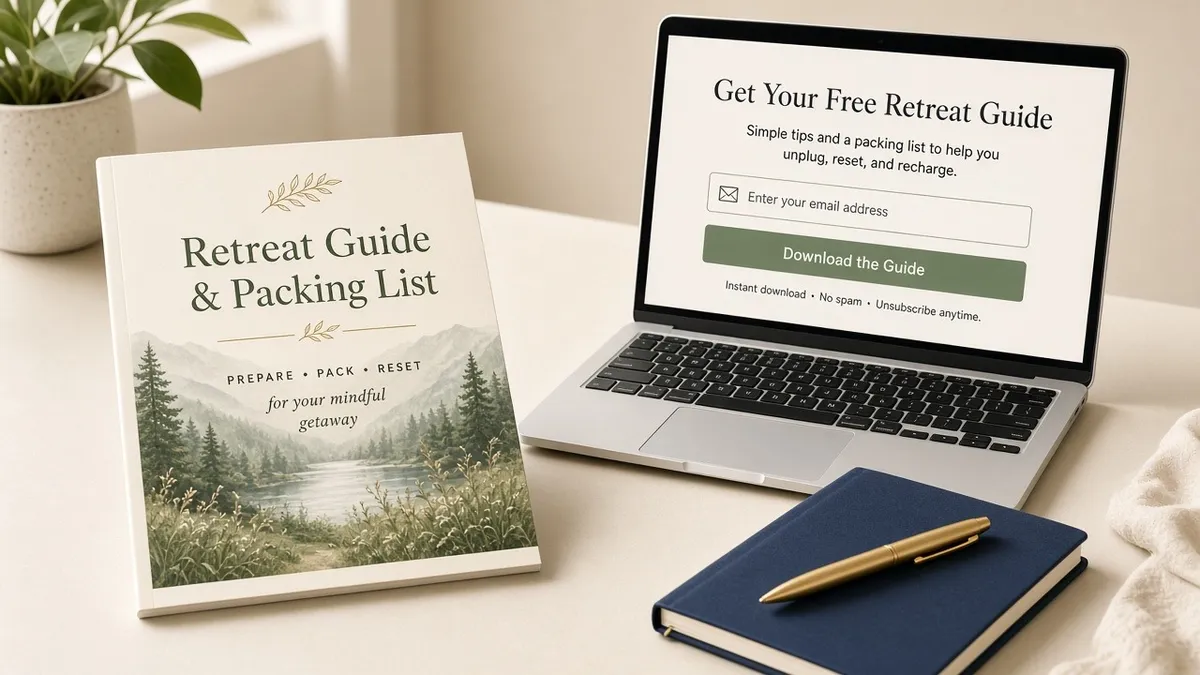
Give them something that helps them decide about *this* retreat. One option that works well is a Retreat Guide: a short PDF that expands on schedule, prep, travel notes, and how you teach, while dates, prices, core inclusions, and material booking terms stay visible on the sales page. Do not hide those essentials behind the download. The guide can add packing lists, a sample day, travel orientation, wellness prompts, venue or past-retreat photos, and a few notes on your teaching style. It does not need to cover every possible topic. A packing checklist, a one-page preview of the week, or a simple “what to expect” sheet can work if it answers real questions about your retreat.
If you include visa or entry notes, treat them as orientation and tell guests to check current official guidance for the destination. Rules change, and a PDF is not a substitute for the source.
Keep the offer tied to the retreat they are looking at. A guide that shows your rooms, rhythm, and teaching style usually helps more than generic tips that could belong to any brand. If the PDF still feels mismatched with the page, How to Brand a Retreat can help you align the look and language. If the sample day inside the guide is still thin, finish the schedule work in How to Plan a Retreat before you design the PDF.
Useful, relevant value matters more than a discount alone. A waitlist can also be useful when dates or rooms are not released yet, as long as you say what subscribers will receive. Lead with usefulness so the ask for an email feels fair.
Follow Up with Interested Guests
When someone downloads your guide, they asked for that resource about this retreat. That is interest, not blanket consent to marketing emails or texts. Deliver what they requested. At signup, clearly explain any ongoing emails you plan to send, obtain appropriate marketing permission, and honor opt-outs. Treat SMS as a separate opt-in if you use it at all.
Follow-up that respects them usually looks like delivering the guide promptly, then (only with appropriate permission) a short invite to a discovery call, a genuine time-bound bonus when you have one (extra session, early room pick, or a small amenity) with a real end date and no invented scarcity, proof from past guests or a short video from the venue, and clarity that points back to what is already on the sales page. Write like a human who wants them on the right week.
If a bonus touches price or payment timing, keep the math honest and put the details where How to Price a Retreat already taught you to put them: clear, guest-facing, and without hidden fees. The download's job is interest and conversation. Pricing and core terms belong on the offer page.
Immediate resource delivery is not the same as later marketing follow-up. Set expectations at signup. Send only appropriate opted-in messages. A first follow-up within a day is a suggested starting cadence, not a rule. Adjust timing to what you promised and what people opted into.
Capture, Deliver, Tag, Next Step
Build a simple path and run it every time someone opts in.
Capture. Put the form on the sales page or on a separate opt-in page. Either can work. Keep the download secondary to booking so the primary path to reserve a spot stays clear. One clear promise: what they get, what you need (email, maybe first name), what happens next, and what ongoing emails (if any) they are agreeing to. Mobile-friendly. No maze of fields. Test the flow before you promote it.
Deliver. Email a working download link promptly, and offer confirmation-page access if your form tool supports it. Host the file somewhere stable. Test the link on a phone after a real opt-in so you know the subject line and the link work.
Tag. Add them to a list or CRM segment you can find later, such as “Downloaded Retreat Guide.” Do not tag downloaders as Waitlist unless they actually joined a waitlist. A waitlist segment is for people who signed up for that list, and you should message them about what you promised.
Next step. After delivery, send only appropriate opted-in follow-up: an invite to a call, an answer to a common question, proof when you have it, and a clear booking or call link when they are ready. You do not need a giant sequence on day one.
Tooling here is a category choice, not a product tour. You need a form, email delivery, a way to tag contacts, a record of permission, an unsubscribe path, and a calendar link for calls. Many leaders use separate form, email, and CRM tools; some stacks put those pieces in one suite. Pick what you can operate reliably when several people download the guide in the same week.
What Not to Do
Buying lists. Cold emails to people who never asked about your retreat burn trust and often break the rules of the platforms you use. Grow from your own traffic and your own opt-ins.
Ignoring downloads. If people request the guide and hear nothing, you collected names for nothing. Plan delivery and the first appropriate follow-up before you promote the form.
Mixing up the asset. Keep one clear distinction: a guest resource helps someone choose your week. A hosting manual for leaders is a different document. Build the guest-facing piece for the signup form.
Promising that a PDF alone will fill the room. The download starts a conversation. Ads, the sales page, pricing clarity, and how you show up on the call still matter.
Test Before You Promote
Before you spend money driving traffic to the form, walk this list:
1. Useful: Would a serious guest open this and feel more ready for your retreat?
2. Easy signup: Can someone leave an email in under a minute on a phone, with clear permission language?
3. Delivery: Does a working download link arrive promptly, with confirmation-page access if you offer it?
4. Segment and permission: Can you pull downloaders into one list, and do you have a permission and unsubscribe record?
5. Follow-up: Is an appropriate next message planned for people who opted in, with timing that matches what you promised?
If any row fails, fix it before you add ads or a bigger push. A broken delivery link or a missing unsubscribe path is cheaper to repair now than after you paid for clicks.
What to Do Next
Build the useful download, set up a clear signup form, deliver the guide, tag the contact correctly, and follow up with interested guests who opted in. Those steps turn a quiet sales-page visit into a conversation you can continue.
If you want the full planning, selling, and hosting system in one place, get the free retreat planning guide.
If you would rather map the offer, the form, and the first follow-up with someone who has seen both the leader side and the guest side, book a discovery call. We are happy to think it through with you. Social and longer email sequences can come later; start with a useful resource, a clear form, and follow-up you can actually keep.