Email Marketing for Retreats
Email marketing for retreats works best when you write to people who asked to hear from you. Some are ready to book. Others are still deciding, comparing dates, or waiting on travel plans. Do not assume every subscriber already knows your work or is ready to deposit. Send useful messages with a clear next step, tell people at signup what they will receive, and include unsubscribe instructions they can actually use.
Social media for retreats can introduce people to the retreat. Email is where you follow up with subscribers about dates, rooms, and questions. How long to market a retreat covers the marketing calendar. Here we stay with what goes in the inbox: the list, the segments, the emails, and the follow-up that keeps booking paths clear.
Build an Opt-In Interest List
Build a list of people who have subscribed to hear about your retreats. Past attendance, likes, follows, or saves do not automatically put someone on a marketing list. Invite past guests and followers to subscribe rather than adding them to your email list automatically.
Invite people through a signup form, a retreat lead magnet, a class handout with a clear opt-in, or a discovery-call follow-up. At signup, say what emails they will get, how often you plan to write, and how to unsubscribe. Keep a record of that choice. A download or a conversation is not consent to every future campaign.
After a class, event, or call, offer a clear way to stay in touch when they want it. Honor opt-outs every time, including people who subscribed earlier and later change their mind.
Segment so the Message Matches
Group subscribers by what they asked to hear about and by confirmed booking status when you know it. Declared interests and direct inquiries are more reliable than guessing from opens. Someone who signed up for yoga-retreat updates is not the same as someone who asked about a mindfulness retreat. Someone who already booked this retreat should not keep getting sales emails for the same dates.
Opens and clicks can be useful clues, but they are not reliable intent labels. Privacy features and security scans can distort both opens and clicks, so treat those numbers cautiously. Prefer what people told you they want and whether they have booked.
Tailor the offer and the ask to the group. People who asked about rooms may need a clear path to the retreat sales page. New subscribers may need dates, price, and who the retreat suits. Keep differences honest. Do not invent urgency you cannot fulfill.
A CRM helps when the list grows past what a spreadsheet can manage. Use tags and follow-up reminders in whatever system you will actually maintain. The goal is matching the message to the person.
Write Emails That Are Easy to Act On
Subject lines should be specific, accurate, and useful. Name the retreat, the place, or the question you are answering. All-caps pressure and vague mystery usually feel like noise.
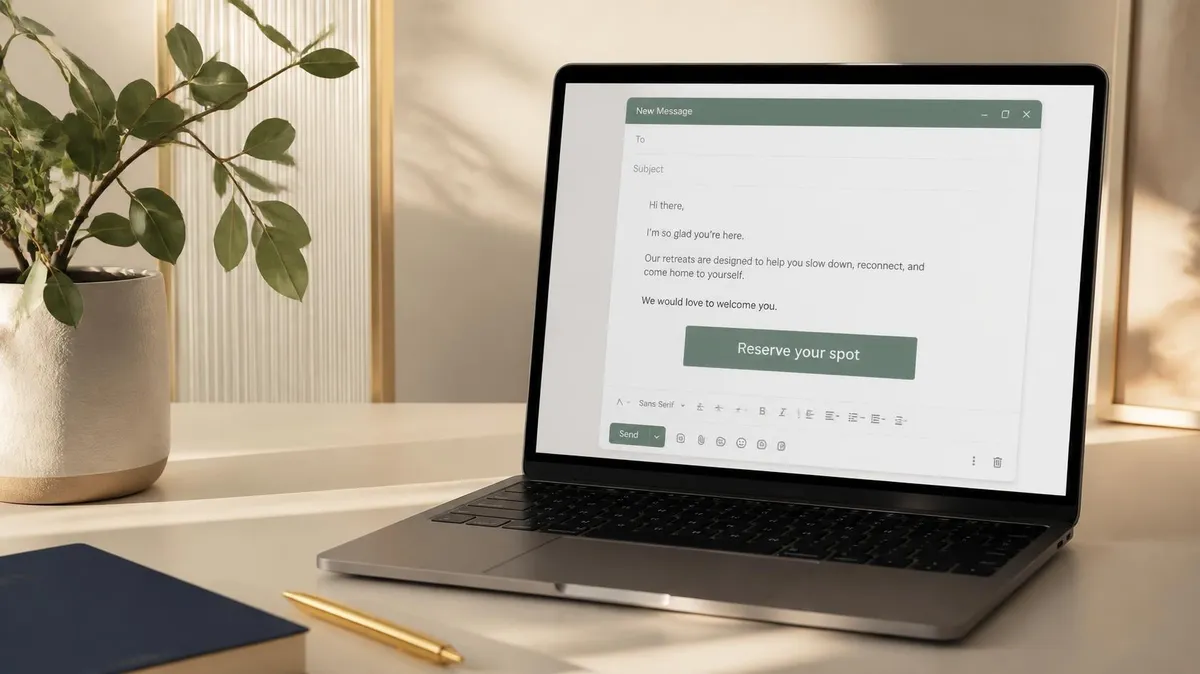
Keep the body short and clear. Say what the retreat is, who it is for, and what happens next. Dates, place, and a plain description of the teaching beat soft marketing claims. If you mention remaining rooms, only do so when the count is true right now, and keep full terms on the offer page.
Every email needs one primary action. That can be a link to the sales page, an invite to reply with a question, or a call booking link. A reply can be the primary action even when there is no link. Put the action where it is easy to find on a phone. Extra unrelated links dilute the ask. Test any link yourself after you send a draft to your own inbox.
When you have a first name, use it. When the name is missing, use a plain greeting such as “Hello” so the line still reads naturally.
Automate Routine Follow-Up
Automation is for consistency, not for replacing care. Later emails in a sequence should match what the person subscribed to receive. If they signed up for packing notes, do not switch them into a different retreat’s sales campaign without a new, clear choice.
Example welcome sequence
The sequence below is for a hypothetical coastal retreat in October. Adapt it to your dates, location and terms.
Email 1. Send the resource they signed up for, such as packing notes, in the same email or as a working download link. Tell them what you will write next and how often, and remind them they can unsubscribe from any message. One primary action: open or save the resource. Example subject: “Your packing notes for the October coastal retreat”
Email 2. Share the dates, price, inclusions, and who this retreat suits, with the same facts that live on your booking page. Keep the terms current. Choose one primary action for this send: visit the booking page, or reply if they are unsure the retreat is a fit. Do not treat both as the same ask. Example subject: “October coastal retreat: dates, price, and who it is for”
Email 3. Answer one common travel or room question in a few sentences, such as airport transfer or shared versus private rooms. Choose one primary action: invite a reply, or a visit to the booking page. Do not treat both as the same ask. Example subject: “Airport transfer and room questions for October”
A recorded click may be automated; it does not prove someone started a booking. Use confirmed booking status and direct inquiries when deciding whom to follow up with.
Before every sales follow-up, check booking status so people who already reserved a room are not still in that retreat’s sales sequence. Stop sales emails for anyone who unsubscribes. Prevent overlapping campaigns so one person is not getting two different booking sequences at once. Pause sales follow-up when a person is in a direct conversation with you, and resume only when that thread is done. If your booking tool and email list are not connected, reconcile bookings manually before you send.
One or two follow-up notes after someone looks at the page is a starting point you can adjust. Space them so you do not feel like a chase. If they stay quiet, stop the sales sequence. That does not mean you must cancel every newsletter they still want.
Schedule sends when you can. Prioritize replies, inquiries, bookings, and opt-outs when you review results. Treat opens cautiously. Use filtered clicks as supporting information, not as the whole story.
Human replies still matter. When someone writes back with a visa question, a roommate ask, or a fitness concern, answer as yourself. Automation keeps routine follow-up moving. Conversation handles the rest.
Before You Send
Opt-in list. People on the list subscribed through an appropriate channel. Signup copy said what they will receive, and unsubscribe instructions are easy to use.
Segments that match reality. Groups reflect declared interests, inquiries, and booking status, not open-rate labels.
One primary action. Every email has a single clear next step: a working link, or a clear invite to reply.
Welcome and relevant follow-up. New subscribers get what they asked for plus a short path forward. Sales follow-up only goes to people who should receive it. Booked guests are removed from that retreat’s sales sequence.
Page bookable. Dates, prices, rooms, and payment work on a phone before you drive more traffic there.
If any of these is still open, fix it before you schedule the next campaign. A polished subject line cannot repair a missing booking path or people who never subscribed.
What to Do Next
Grow an opt-in interest list, segment by what people asked for and whether they booked, write short emails with one clear action, and automate routine follow-up so subscribers hear from you without depending on a perfect memory. Tell people at signup what they will get. Make unsubscribe easy. Keep the sales page ready when someone is ready to book.
Need help putting your retreat email marketing in place? Explore BWR’s marketing services and MyAura CRM, or book a discovery call. We can support your retreat marketing and follow-up: campaigns, CRM setup, and the systems that keep messages consistent.
For a broader plan for your retreat, download our free retreat planning guide.