
How to Host a Retreat
Hosting a retreat well means making the week feel calm for guests while you and your team quietly manage rooms, timing, weather, communication, and the inevitable small problems. This guide focuses on the on-site work: arriving early, keeping guest and team communication clear, preparing for changes, caring for guests, and wrapping each day with good notes. Learning how to host a retreat on site is the week-of job after the plan is already in place.
Planning the timeline, budget, and itinerary lives in how to plan a retreat. Choosing dates is a different question in when to host a retreat. Here we stay with what happens once you are at the venue and responsible for the days themselves.
Arrive Before the Guests
Arrive one to two days early when you can. Use that time to meet venue staff, walk the schedule in the actual spaces, and finish logistics that are hard to fix once guests are checking in. Test sound if you will use it. Check practice rooms or mats. Confirm room assignments against your list. Walk the paths guests will take from rooms to meals to sessions so you are not discovering a locked gate on day one.
Early arrival also helps you build working relationships with the people who run the property. Meeting the venue team before guests arrive makes it easier to solve questions and changes during the week. It also gives you a quieter window to settle yourself before the group arrives.
If you co-lead, use the early window to agree who owns which day-of jobs. Shared leadership roles are covered in more detail in how to co-lead a retreat. On site, the useful version is a short list: who greets arrivals, who checks dietary notes with the kitchen, who handles transport, and who holds the first-aid kit and key numbers.
Two Channels - Guest Updates vs Team Huddle
Keep guest communication and team communication separate. Guests need daily updates and meeting points without seeing every behind-the-scenes adjustment. Your team needs a place for run-of-show, weather calls, dietary notes, transport, and spa or activity bookings.
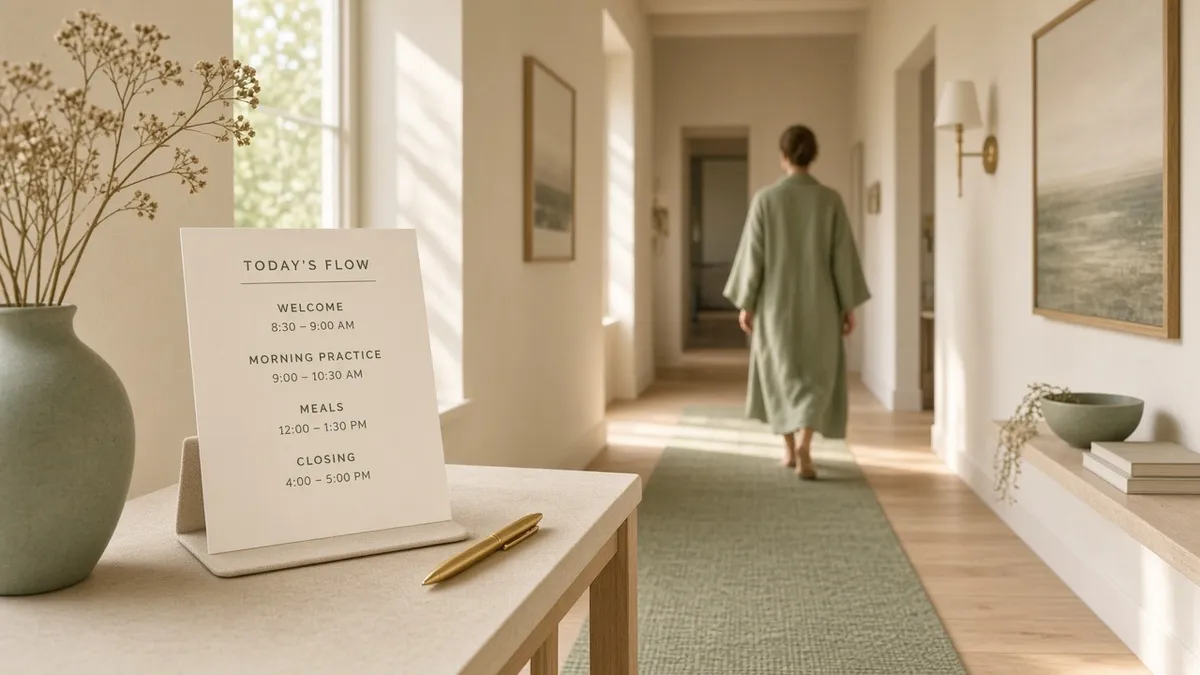
A short daily huddle - often about ten minutes - is enough when it is consistent. Review the day sheet, weather, food notes, pickups, and any guest-specific logistics the team needs to coordinate. Post the plan where guests will see it: a morning message in the guest channel, plus a printed mini-schedule in two places such as the breakfast area and reception. Guests who want to unplug still need a way to know what comes next.
When something changes, use a clear protocol. Announce once in the guest channel, post a printed update in the same places as the schedule, and confirm the change directly with anyone affected. Do not rely on a single chat message that half the group missed while they were in session.
Before higher-risk or outdoor activities, do a quick sixty-second "what if" with the team: weather move, transport delay, or medical need. The point is that everyone knows Plan B without improvising in front of guests.
Safety, Weather Backup, Incident Log
Prepared leaders help guests relax. Ask the venue for a brief on emergency exits, routes to the nearest clinic or hospital, and who is on duty after hours. Keep a first-aid kit where your team can reach it, and keep approved emergency and venue contact information easy for the team and for guests where it is appropriate, so people are not hunting for it during a stressful moment.
Have indoor alternatives for outdoor sessions when weather turns, and build time buffers around transport so a late van does not cascade into a missed meal. Local partners who support the week - a guide, a spa, a transfer - should know the same change protocol you use with guests; retreat marketing partnerships covers how those relationships work when they are set up before arrival.
Keep a simple incident log. Record only the operational facts needed for follow-up: what happened, who was involved at a high level, what you did, and what still needs attention. Avoid unnecessary sensitive personal or medical details. If the venue has its own incident process, follow that too. Debrief with the team at day's end while details are fresh. The goal is readiness and clear records, not fear.
Care That Is Operational
Care on site is a set of jobs, not a slogan. Make one real check-in with each guest on arrival, and another during the week, so people have a chance to say if a room, schedule, or practice detail is not working. Confirm rooms are ready before guest arrival. A short handwritten welcome note can be enough to make the welcome feel human.
Coffee and tea available early is ordinary hospitality for guests who rise before the first session. Offer it in a way your venue and staffing can support.
Small operational details matter more than big promises: water in practice spaces, clear meeting points, dietary notes honored, and a team member who can answer "where do I go next?" without checking three chats. When those pieces work, guests feel held.
Capture Proof Without Turning the Week Into a Shoot
You will want a few real moments later for your sales page and social posts. Assign the job: one person on the team holds a short capture window, or you set two light windows in the week when photos are welcome. Get consent for guest images. Do not turn the retreat into a production where every session stops for another angle.
Light content capture sits beside your wider social media for retreats plan. The week itself stays about the guests and the teaching. Proof is a side job with a time box, not the main event.
A Simple On-Site Check
Before you add more activities to an already full day, run through this short list:
Arrived early. Staff introductions, space checks, room confirmations, and day sheets are done before guests arrive.
Channels split. Guests have an updates channel and posted schedules; the team has a separate huddle and change protocol.
Safety and weather ready. Exits, clinic and emergency routes, after-hours contact, first-aid kit, approved emergency and venue contacts, indoor backups, and transport buffers are known to the team.
Care jobs done. Arrival and mid-week check-ins, rooms confirmed ready before guest arrival, and early coffee or tea available within what the venue can support.
Proof captured lightly. Someone owns short capture windows with consent; the week is not a shoot.
Day's issues logged. Incidents and open follow-ups are written down and debriefed with the team.
If any of these is still open, fix it before you stack more programming. A beautiful afternoon activity cannot repair a missing clinic or emergency route or a guest channel that never gets the schedule change.
Hand Off to Follow-Up
When the week ends, the on-site job gives way to follow-up: thank-yous, feedback, next offers, and rebooking conversations. Those follow-up steps belong in later planning for your retreat business. This article stops at calm execution of the week itself so you can hand guests off cleanly instead of improvising the close on the last morning.
What to Do Next
Arrive early, keep guest and team channels separate, prepare safety and weather backups, do the operational care jobs, capture a little proof without turning the week into a shoot, and log issues before they fade. That is the practical core of hosting a retreat on site.
Need help building the planning, communication, and systems around your retreat? Explore BWR's marketing services, or book a discovery call to talk through the systems supporting your retreat business.
For a broader plan for your retreat, download our free retreat planning guide.
When you're ready to bring guests back, see how to get repeat retreat guests.